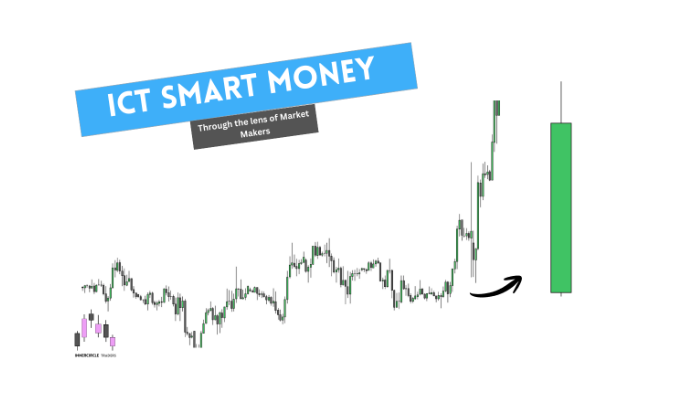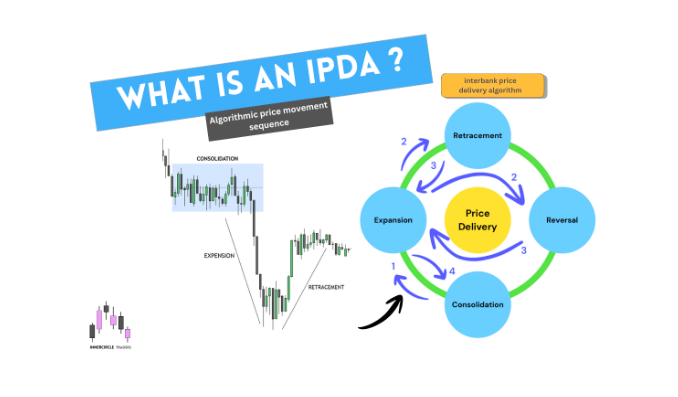


An ICT inversion fair value gap (IFVG) is a three-candle imbalance zone in price action trading that has been fully violated by a candle body close, causing the zone to reverse its role from support to resistance or vice versa. Developed within the Michael J. Huddleston Inner Circle Trader (ICT) methodology, the inversion fair value gap acts as a high-precision entry zone for momentum continuation after a shift in order flow.
IFVGs form when institutional displacement fails to hold, signaling a change in delivery and liquidity direction. A bullish fair value gap becomes bearish resistance after a full close below, while a bearish fair value gap becomes bullish support after a full close above.
Traders use ICT inversion fair value gaps for refined entries within smart money concepts (SMC), especially when aligned with liquidity sweeps, order blocks, and premium-discount zones.
What is an ICT Inversion Fair Value Gap?
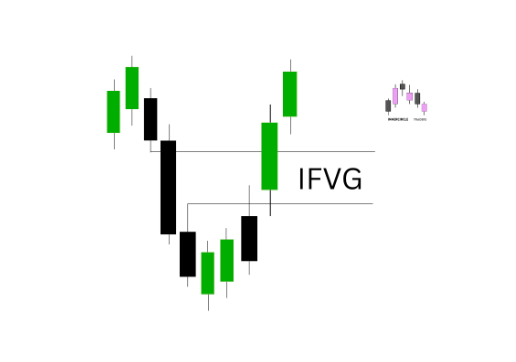
An ICT inversion fair value gap is a 3-candle imbalance zone that price has violated by closing fully through it. Once breached, the zone inverts its polarity: a bullish FVG becomes bearish resistance, and a bearish FVG becomes bullish support.
An inversion fair value gap forms at the moment price does not simply retrace into the FVG and reverse — it closes fully through the zone, leaving it behind.
Michael J. Huddleston, creator of the Inner Circle Trader methodology, defines this violation as a change in state of delivery. The FVG no longer attracts price as a fill target. It now repels price from the opposite side.
If you want to know exactly when the London, New York, Tokyo, and Sydney sessions open in your local time, this Forex Market Hours tool makes it simple and accurate.
The IFVG zone boundaries remain identical to the original FVG: the high of candle 1 to the low of candle 3 for a bearish IFVG, and the low of candle 1 to the high of candle 3 for a bullish IFVG. Only the role of the zone changes.
What is the Difference Between FVG and Inversion FVG (IFVG)?
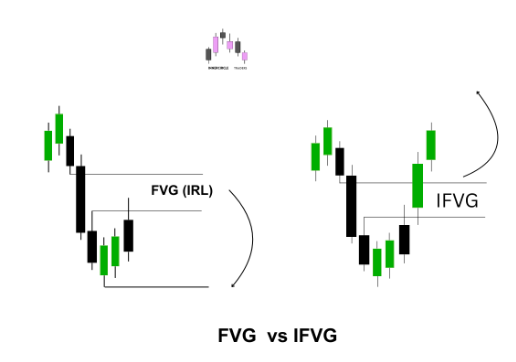
A fair value gap is an unfilled 3-candle imbalance zone that attracts price back to retest it. An inversion fair value gap is a previously filled FVG that now repels price from the opposite side. One zone pulls price in; the other pushes price away.
How Does a Standard FVG Behave?
A bullish FVG sits below current price after an upward displacement. Price retraces into the zone and reverses upward. The zone acts as support. A bearish FVG sits above current price after a downward displacement. Price retraces into the zone and reverses downward. The zone acts as resistance.
The key condition is that price enters the zone but does not close beyond it. The zone holds. That is the defining feature of an active, valid FVG.
How Does an Inversion FVG Behave?
An inversion FVG forms when price enters the FVG zone and closes fully beyond it. The candle close through the zone is the inversion trigger. From that moment, the zone’s role reverses.
A bullish FVG that price closes below becomes a bearish inversion FVG — resistance when price retests the zone from below. A bearish FVG that price closes above becomes a bullish inversion FVG — support when price retests the zone from above.
The 3 Key Differences Between FVG and IFVG
- Formation trigger: FVG forms from a displacement candle. IFVG forms from a full candle close through an existing FVG zone.
- Role: FVG acts in the same direction as the original displacement. IFVG acts in the opposite direction.
- Trade direction: Traders buy at bullish FVGs. Traders sell at bearish IFVGs formed from bullish FVGs — and vice versa.
What are the 2 Types of ICT Inversion Fair Value Gap?
The ICT inversion fair value gap has 2 types: bullish and bearish. A bullish IFVG forms from a failed bearish FVG and acts as support. A bearish IFVG forms from a failed bullish FVG and acts as resistance.
Proper risk management starts with position sizing. This Position Size Calculator helps you calculate the exact lot size based on your risk percentage and stop loss.
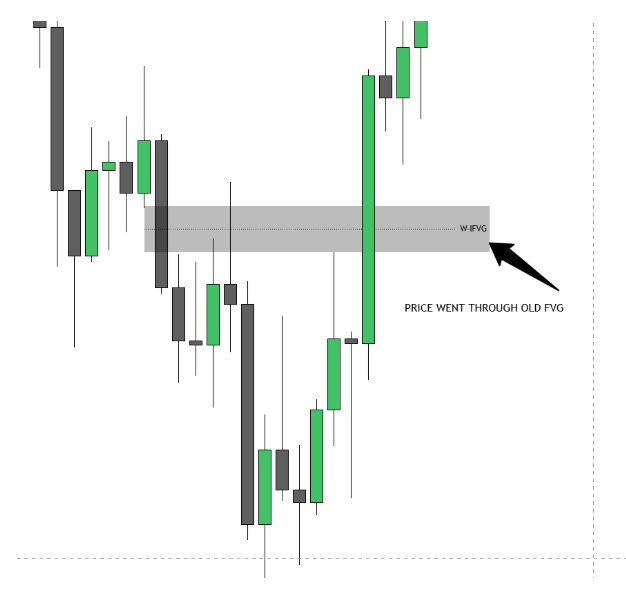
What is a Bullish Inversion Fair Value Gap?
A bullish IFVG forms through the following 4-step sequence:
- A bearish FVG forms during a downward displacement move.
- Price retraces upward into the bearish FVG zone.
- A candle closes fully above the top of the bearish FVG zone, violating it.
- The former bearish FVG is now a bullish IFVG. When price pulls back into the zone, it acts as support for long entries.
The zone boundaries of the bullish IFVG are identical to the original bearish FVG: the low of candle 1 to the high of candle 3 from the original 3-candle bearish FVG formation.
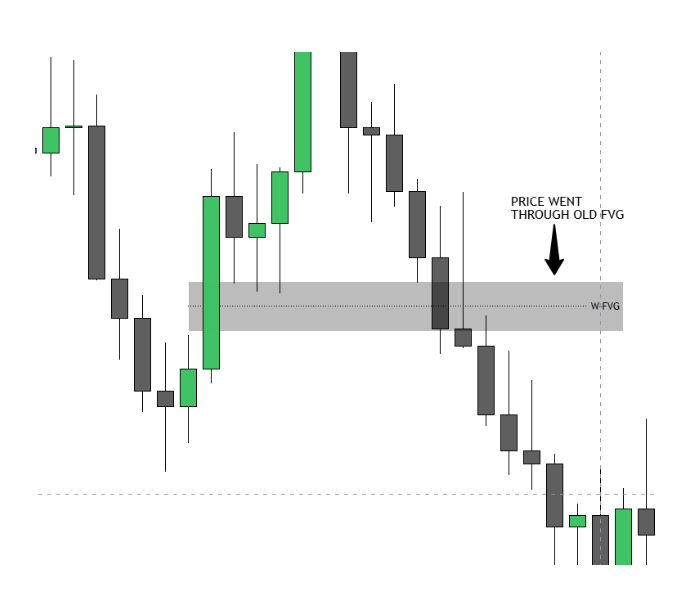
What is a Bearish Inversion Fair Value Gap?
A bearish IFVG forms through the mirror-image sequence:
- A bullish FVG forms during an upward displacement move.
- Price retraces downward into the bullish FVG zone.
- A candle closes fully below the bottom of the bullish FVG zone, violating it.
- The former bullish FVG is now a bearish IFVG. When price retraces into the zone, it acts as resistance for short entries.
Invalidation Rule: A bullish IFVG is invalidated when price closes below the bottom of the zone. A bearish IFVG is invalidated when
How Do You Trade the ICT Inversion Fair Value Gap?
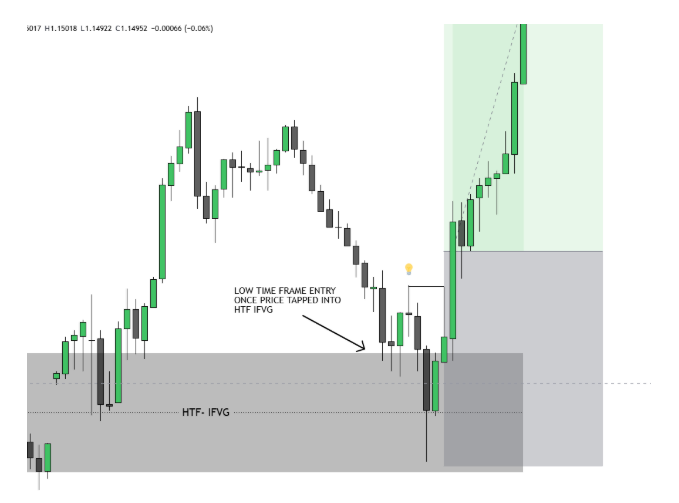
Trading the ICT inversion FVG requires 3 elements: a higher timeframe directional bias, a confirmed IFVG from a full candle close through the original FVG, and a lower timeframe entry trigger when price retests the inverted zone.
Bullish IFVG Trade Setup
Confirm a bullish bias on the daily or 4-hour chart. Price trades in a discount zone — below the 50% midpoint of the most recent swing range.
Identify a bearish FVG on the 1-hour or 15-minute chart within the pullback of the bullish trend. Watch for price to close a full candle body above the top of the bearish FVG. The zone is now a bullish IFVG.
Wait for price to retrace back into the bullish IFVG zone. Drop to the 5-minute chart. Identify a market structure shift to the upside or a bullish displacement candle within the IFVG zone. Enter long after the confirmation candle closes.
These liquidity pools act as magnets for price, providing clear targets. Before placing any trade, it’s important to understand currency values. This Currency Converter lets you quickly convert currencies using live exchange rates.
Stop loss: below the low of the bullish IFVG zone. Target: the nearest liquidity pool above — a swing high, equal highs, or a higher timeframe bearish FVG acting as resistance.
Bearish IFVG Trade Setup
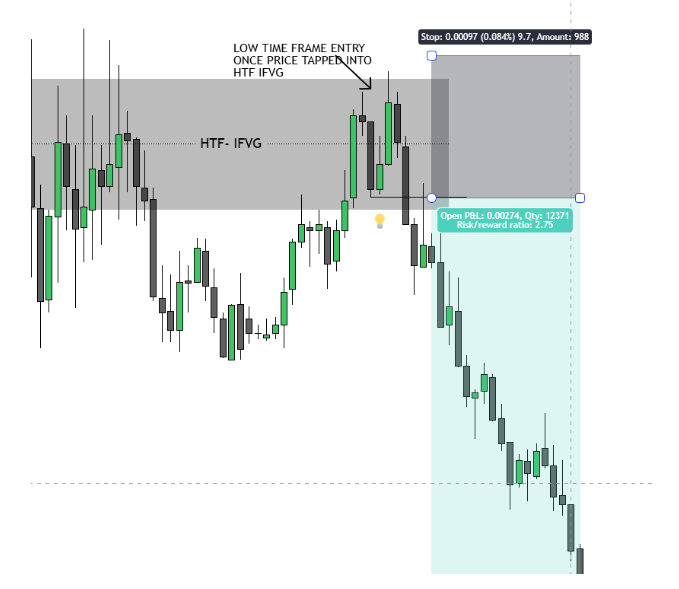
Confirm a bearish bias on the daily or 4-hour chart. Price trades at a premium — above the 50% midpoint of the most recent swing range.
Identify a bullish FVG on the 1-hour or 15-minute chart within a retracement of the bearish trend. Watch for price to close a full candle body below the bottom of the bullish FVG. The zone is now a bearish IFVG.
Wait for price to retrace upward into the bearish IFVG zone. On the 5-minute chart, look for a market structure shift to the downside or a bearish displacement candle within the zone. Enter short after confirmation.
Stop loss: above the top of the bearish IFVG zone. Target: the nearest liquidity pool below — a swing low, equal lows, or a higher timeframe bullish FVG acting as support.
3 Conditions That Increase IFVG Reliability
- The IFVG forms after a liquidity sweep — price took out a swing high or swing low before the FVG was violated, confirming institutional activity.
- The IFVG zone aligns with another PD array, such as an order block or a second FVG at the same price level.
- The inversion triggers during a kill zone — the London open (2:00 AM – 5:00 AM EST) or New York open (7:00 AM – 10:00 AM EST) — when institutional participation is highest.
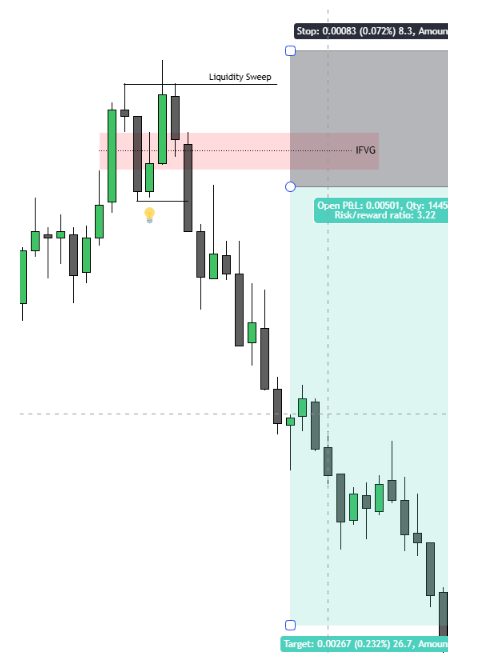
ICT Inversion Fair Value Gap: Quick Reference
What is it: A 3-candle FVG zone that price has fully closed through, inverting its role from support to resistance or from resistance to support.
Bullish IFVG: Formed from a failed bearish FVG. Acts as support on the retest. Used for long entries.
Bearish IFVG: Formed from a failed bullish FVG. Acts as resistance on the retest. Used for short entries.
Inversion trigger: A full candle body close beyond the FVG zone boundary. Wicks do not confirm inversion.
Invalidation: Bullish IFVG invalidated by a candle close below the zone. Bearish IFVG invalidated by a candle close above the zone.
- Best timeframe to identify: 1-hour or 15-minute chart
- Best timeframe to execute: 5-minute chart with structure shift confirmation
- Stop loss: Beyond the far edge of the IFVG zone
- Target: Nearest liquidity pool in the trade direction
Final Thoughts on the ICT Inversion Fair Value Gap
The ICT inversion fair value gap is one of the most precise entry tools in the ICT methodology. It removes guesswork from the entry process by providing a clearly defined zone — the original FVG — with a clearly defined trigger — the full candle close through it.
Most retail traders discard a fair value gap the moment price closes through it. ICT traders relabel it and watch for the retest. That difference in approach is what generates the edge. The zone does not disappear when violated. It changes function.
Use the IFVG within the broader ICT framework: confirm the higher timeframe bias, wait for a liquidity sweep, identify the IFVG on an intermediate timeframe, and execute from a lower timeframe confirmation.
When those 4 elements align, the inversion FVG produces clean, high-probability entries that reflect actual institutional order flow rather than random price movement.
To deepen your understanding, study the ICT fair value gap, ICT order block, and ICT balanced price range — the 3 concepts that interact most directly with the inversion FVG in live market conditions.